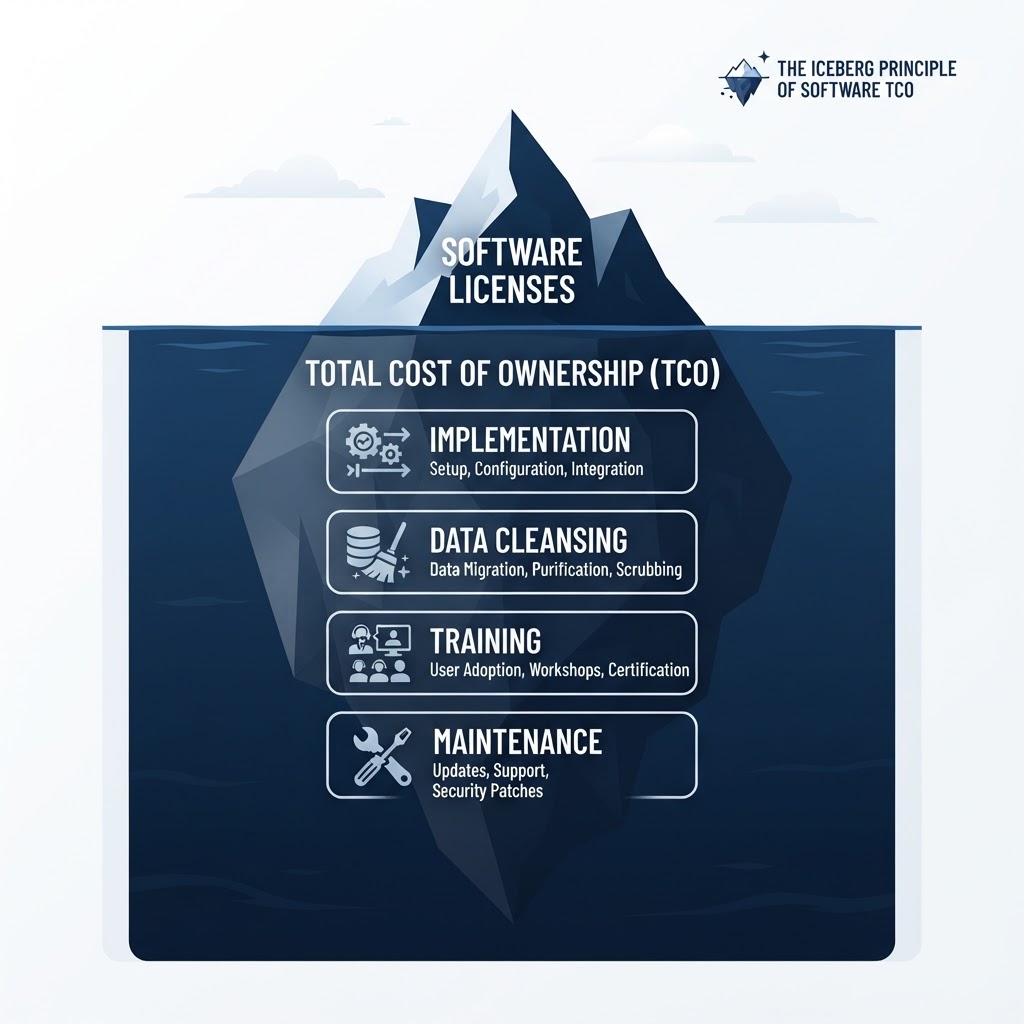
An ERP subscription quote answers one cost question. It does not describe all the work your business must fund to make the system useful. Before comparing proposals, agree on the workflow, records, people, and review period included in the estimate.
Microsoft's implementation guidance identifies subscription, storage, implementation, training, and ongoing work as budget considerations for Dynamics 365. That is a useful reminder to look beyond licenses; it is not a price estimate for VanteLIQ or your project.
What does the quoted scope actually include?
Ask each vendor or implementation partner to describe the same starting scope. Which business process is included? Which entities, locations, users, records, and integrations are assumed? Which reports and approval rules must work at the end?
Keep exclusions beside the price. A lower quote that leaves data cleanup, reporting, or training to your team may require more internal work than its headline suggests. Record who supplies each deliverable and how you will recognize its completion.
Which costs happen once, and which continue?
Separate initial setup and migration from recurring subscription, support, storage, integration maintenance, and administration. Ask what changes the recurring charge: user counts, transaction volume, added locations, optional modules, or support level.
Use a consistent comparison period across proposals. Mark assumptions clearly and ask how renewal terms, expansion, or an exit would affect the estimate. Avoid treating an introductory quote as a permanent operating cost.
How much work belongs to your team?
List the people needed to explain current processes, resolve conflicting records, test permissions, review reports, and learn the new workflow. Ask those people to estimate their availability rather than assigning their time invisibly.
For a hypothetical business starting with job costing, the operations lead might need to explain how labor reaches a job, while finance confirms which costs belong in the margin calculation. Put that work in the plan even when no outside invoice is attached to it.
What must be checked before you pay to expand?
Define a few acceptance checks for the first workflow: can a manager trace a total to its source records, can staff complete a representative task, and do approvals route to the intended people? Keep unresolved differences visible.
Ask what happens if a connection fails, a source field changes, or a report needs correction after launch. Identify who handles support and whether that work is included. A cost discussion should cover the ordinary work of keeping the system usable.
How does a phased rollout change the budget?
VanteLIQ's current public approach emphasizes starting with existing systems, reconciling information, activating a workflow, and expanding after validation. The site identifies JobOps as its launch edition and Distribution and Services as next editions; confirm current availability and scope directly for your business.
Budget for the first agreed stage, then define what evidence and estimate are needed before another stage begins. A phased plan can still incur parallel-system costs and repeated training, so ask about those assumptions rather than assuming staging automatically lowers the total.
Bring a scope list, a responsibility map, and your unanswered cost questions to the conversation. Request an ERP fit assessment to discuss a rollout that can be evaluated against your actual operations.